How to Catch Crappie Throughout the Year
Crappie are pattern fish. Master four seasonal patterns and you'll catch them every month of the year.
By Alain Quiroga · November 30, 2025 · 6 min read
Mastering how to catch crappie requires an understanding of their seasonal migrations and a deep appreciation for their sensitivity to water temperature and structure. Whether you are targeting slab Black Crappie in the vegetation-rich waters of Florida or White Crappie in the murky reservoirs of the Midwest, consistency comes from matching your tactics to the calendar. This guide provides expert-level strategies to ensure you find and catch these elusive panfish from the early spring thaw through the coldest winter months.
Spring Transitions and the Spawning Ritual
As water temperatures climb into the mid-50s, crappie begin their move from deep winter basins toward the secondary points leading into spawning flats. During this pre-spawn period, fish are aggressive and feed heavily to prepare for the energy demands of reproduction. Many anglers find success using side-imaging sonar to locate roving schools of fish suspended near submerged brush piles or standing timber in 10 to 15 feet of water. In famous crappie fisheries like Grenada Lake in Mississippi, this is the prime time for 'spider rigging,' a technique where multiple rods are spread across the bow to cover a wide swathe of water at varying depths.
When the water hits the 60 to 65-degree mark, the spawn begins in earnest, and crappie move into incredibly shallow water, often less than three feet deep. Look for hard bottoms near cypress knees, buckbrush, or fallen logs. A long 'dipping' rod, such as a 10-foot B'n'M Pole, allows you to drop a jig vertically into thick cover without spooking the fish. A 1/16-ounce jig head with a high-visibility chartreuse or white plastic tail is a staple for this type of close-quarters combat. Remember that male crappie often turn dark, almost black, during this time and stay shallow to guard nests, while the larger females may linger just offshore.
Summer Heat and Deep Water Tactics
Once the spawn concludes and water temperatures rise into the high 70s, crappie abandon the shallows for the cooler, oxygen-rich depths of the main lake. During the summer, these fish become highly structure-oriented, colonizing deep-water brush piles, bridge pilings, and submerged river channel ledges. On large southern impoundments like Lake Eufaula or Kentucky Lake, summer crappie are often found at depths of 15 to 25 feet. Successful anglers utilize GPS technology to mark specific brush piles, then use vertical jigging techniques to pick fish off the top of the cover. This is the era of 'tight-lining,' where a heavy sinker keeps the bait stationary in the strike zone.
The use of forward-facing sonar, such as Garmin LiveScope, has revolutionized summer crappie fishing by allowing anglers to see how fish react to their lures in real-time. During the heat of the day, crappie may become lethargic, requiring a slow, finesse presentation. A 2-inch Bobby Garland Baby Shad on a 1/8-ounce jig head is a reliable choice for reaching these deeper depths quickly. If the bite is particularly tough, tipping your jig with a live minnow or a Crappie Nibble can provide the scent necessary to trigger a strike from a neutral fish. Don't overlook night fishing under submerged lights, as this attracts baitfish and brings the crappie up from the depths.
Fall Migrations and Chasing Baitfish
As autumn arrives and water temperatures begin to drop back into the 60s, crappie follow schools of shad from the main lake back into the creek arms. This 'fall turnover' period can be challenging, but once the water stabilizes, the fishing is among the best of the year. Crappie are often found 'herding' baitfish against steep bluffs or flats. Because the fish are actively chasing food, faster-moving presentations work well. Trolling small crankbaits, like the Rapala Shad Rap or the Strike King Bitsy Pond Minnow, can be an effective way to locate active schools localized in the mid-depth ranges.
Expect the fish to be held at depths of 10 to 15 feet during the mid-fall, often moving shallower as the day warms. In the clear waters of reservoirs like Table Rock Lake, look for fish suspended under boat docks that have deep water underneath them. Skipping jigs under these docks is a specialized skill that can yield massive slabs. Use a 6-foot light-action rod with a fast tip to propel a 1/24-ounce jig far into the shadows. As the water cools further toward the 50-degree mark, the fish will begin to congregate in massive schools, making them easier to find with traditional 2D sonar.
Winter Patterns and Cold Water Precision
When winter sets in and water temperatures drop below 45 degrees, crappie metabolism slows significantly, but they do not stop feeding. In fact, winter can produce some of the largest 'slab' crappie of the year because the fish are concentrated in very specific wintering holes. In the North, this involves ice fishing over deep basins, while in the South, it means targeting the deepest brush piles or the original river channel bends. Precision is key during the winter; you often have to put the jig right on the fish’s nose to get a reaction. A 1/32-ounce jig or a small Swedish Pimple spoon can be very effective in these cold conditions.
Low-and-slow is the mantra for winter crappie. Using 4-pound test fluorocarbon line is essential for its invisibility and its ability to sink, which helps manage small jigs in deep water. In places like Reelfoot Lake or Santee Cooper, winter anglers often look for 'stump fields' in 20 feet of water. If you are fishing through the ice on a lake like Red Lake in Minnesota, focusing on the dusk and dawn transitions is critical, as crappie often move slightly higher in the water column to feed during these low-light periods. Remember to keep movements subtle; a tiny twitch is often more than enough to trigger a cold-water bite.
Species Identification and Conservation Rules
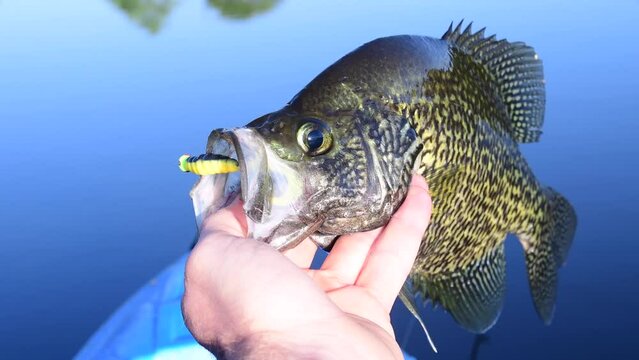
Regardless of the season, understanding the difference between the two primary species is vital. The Black Crappie (Pomoxis nigromaculatus) is known for the seven or eight dorsal spines and irregular dark blotches. They generally prefer clearer water and are often associated with aquatic vegetation like coontail or hydrilla. Conversely, the White Crappie (Pomoxis annularis) typically has six dorsal spines and distinct vertical bars. They are more tolerant of turbid, muddy water and thrive in the silty reservoirs of the Missouri and Mississippi River systems. Knowing which species dominates your local lake will dictate whether you should fish the weeds or the timber.
State-specific regulations are also a critical component of professional crappie fishing. For example, in many parts of Mississippi, there are strict length limits (often 10 to 12 inches) and daily creel limits designed to maintain the trophy quality of the fishery. Always check the latest updates from your state's Department of Natural Resources, such as the Texas Parks and Wildlife or the Florida Fish and Wildlife Conservation Commission. Keeping a digital scale and a certified measuring board on your boat ensures that you stay within legal limits while also documenting those potential state-record-breaking catches that every angler dreams of landing.
Frequently asked questions
What is the best water temperature for the crappie spawn?
Crappie typically begin spawning when water temperatures reach 60 to 65 degrees Fahrenheit. In Southern states like Mississippi, this usually occurs in March, while in Northern states like Wisconsin or Minnesota, it may not happen until May or June. Light levels and moon phases also influence the timing of the move to the shallows.
What gear is best for crappie fishing?
For vertical jigging, use a 10 to 12-foot graphite rod like those from B’n’M or ACC Crappie Stix. For casting small jigs, a 6 to 7-foot light or ultra-light action rod is ideal. Pair these with a 1000-series spinning reel and high-visibility 4-pound to 6-pound test monofilament or fluorocarbon.
Can you catch Black and White crappie in the same lake?
Yes, Pomoxis annularis (White Crappie) and Pomoxis nigromaculatus (Black Crappie) often coexist. White crappie are more tolerant of turbid, silty water and have vertical bars on their sides. Black crappie prefer clearer water with more vegetation and feature irregular dark speckles. Both species respond to similar lures but may inhabit slightly different areas of the same lake.
Which lures or baits are most effective for crappie?
Effective lures include 1/16 or 1/32-ounce lead-head jigs tipped with Bobby Garland Baby Shad plastics, Strike King Mr. Crappie baits, or Z-Man Micro Finesse plastics. Live fathead minnows hooked through the lips or back on a size 2 or 4 Aberdeen hook are also highly effective, especially when used under a slip bobber.