Top Coastal Fishing Spots on the East Coast
Maine to Florida, these are the East Coast spots that deliver year after year.
By Alain Quiroga · January 5, 2026 · 5 min read
The U.S. Atlantic seaboard offers some of the most diverse and productive saltwater angling opportunities in the world, stretching from the rocky cliffs of New England to the sandy shoals of the Mid-Atlantic. Anglers can find everything from world-record striped bass in the North to massive red drum in the South, provided they understand the seasonal migrations and local topographic features. This guide explores the premier coastal destinations that define the East Coast fishing experience.
The Legendary Waters of Cape Cod, Massachusetts
Cape Cod remains a bucket-list destination for saltwater anglers, primarily due to its unique geography that intercepts the annual striped bass migration. The Cape Cod Canal, a seven-mile man-made waterway, serves as a high-speed highway for stripers moving between Buzzards Bay and Cape Cod Bay. Anglers often line the rip-rap banks during 'breaking tides,' casting heavy 3-to-5-ounce jig heads paired with 9-inch Paddle Tail swimbaits or Savage Gear sand eels. In these high-current environments, using a heavy-duty spinning reel like a Penn Slammer IV with a fast recovery rate is essential for keeping fish from pinning the line against submerged boulders.
Beyond the canal, the outer beaches of the National Seashore offer classic surf fishing for those willing to trek through the dunes. Areas like Nauset Beach and Race Point are famous for producing large fish in the deep troughs and 'sloughs' created by shifting sandbars. During the summer months, water temperatures hovering between 60 and 68 degrees Fahrenheit attract schools of Atlantic Menhaden, which in turn draw in trophy-class bass. Beyond stripers, the late summer brings bluefin tuna within reach of offshore anglers departing from Chatham, often targeting fish feeding on sand eels in depths of 100 to 200 feet using high-speed vertical jigs.
Montauk Point: The Surfcasting Capital
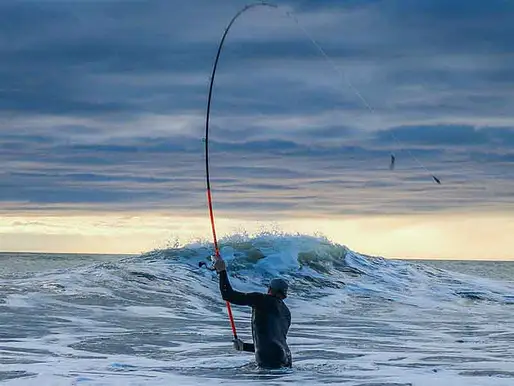
Montauk, located at the easternmost tip of Long Island, is often referred to as the 'Surfcasting Capital of the World.' The convergence of the Long Island Sound and the Atlantic Ocean creates massive rips and turbulent water around the iconic Montauk Point Lighthouse. This turbulence disorients baitfish like bay anchovies and mullet, creating a feeding frenzy for striped bass, bluefish, and false albacore. The legendary 'Fall Run' in October is the pinnacle of the season, where massive blitzes can occur at any moment, turning the water white with foam as predators attack the surface.
Successful tactics at Montauk often involve using specialized 'bucktail' jigs tipped with pork rind or synthetic trailers. The 1.5 to 2-ounce white bucktail is a staple for local experts, as it mimics a wide variety of forage and can be bounced along the rocky bottom despite the heavy surge. For those fishing the south side sand beaches, long-casting lures like the Super Strike Zig Zag or the 2.5-ounce Gibbs Bottle Plug are essential for reaching the outer bars. Anglers must be wary of the slippery 'bowling ball' rocks, making studded wading boots or Korkers an absolute necessity for safety and stability.
North Carolina’s Outer Banks and Hatteras Light
The Outer Banks (OBX) of North Carolina provide a completely different environment, characterized by shifting inlets and expansive shallow sounds. Oregon Inlet and Hatteras Inlet are the primary gateways for both inshore and offshore adventurers. This region is world-renowned for its fall red drum run, where 'bull' reds exceeding 40 inches are frequently caught from the surf. These fish are drawn to the warmer waters of the Gulf Stream, which brushes close to the coast at Cape Hatteras, often keeping water temperatures in the mid-60s well into November.
Surf fishing in the OBX requires heavy gear, specifically 12-foot 'Hatteras-style' rods capable of throwing 8 ounces of lead plus bait to hold bottom in the heavy Atlantic rollers. The fish-finder rig is the standard setup, usually featuring a 10/0 circle hook to ensure safe catch-and-release for these protected giants. In addition to drum, the spring months see a massive influx of bluefish and Spanish mackerel. Small metal spoons like the Sea Striker Surf Rocket, retrieved at high speeds, are remarkably effective when these toothy predators are schooling near the surface at the tip of the Cape.
The Jersey Shore: Bunker Schools and Big Bass
New Jersey’s coastline, particularly the stretch from Sandy Hook down to Barnegat Inlet, offers world-class striped bass fishing centered around 'the bunker.' Broadly known as Atlantic Menhaden, these oily baitfish congregate in massive schools just off the beach. When the bass find these schools, the results are explosive. Anglers often utilize 'snag and drop' techniques or use pre-rigged weighted treble hooks to catch a live bunker and then immediately swim it below the school where the larger 'cow' stripers are lurking. This fishery is most productive in May and June, and again in November.
For those who prefer artificials, New Jersey is the birthplace of many legendary plug designs. Trolling Mojo rigs or deep-diving plugs like the Stretch 25 is a common tactic for boaters working the 3-mile line. In the surf, the 'Jersey Shore' style involves using needlefish plugs at night or poppers during the first light. The presence of artificial reefs throughout the mid-coast region also provides excellent habitat for black sea bass and summer flounder (fluke). Using a 7-foot medium-action rod with a 3/4-ounce bucktail tipped with a Berkley Gulp! Grub is a proven method for targeting fluke in the surf.
Chesapeake Bay Mouth and Virginia Beach
The Chesapeake Bay is the primary spawning ground for approximately 70% to 90% of the Atlantic striped bass population, making its mouth at Virginia Beach a critical waypoint for migratory fish. During the winter months of December and January, the 'Bay Dogs'—massive stripers—often linger around the Chesapeake Bay Bridge-Tunnel (CBBT). This 17-mile structure provides immense vertical relief and current breaks that hold fish during the colder months. Anglers often use 1.5-ounce lead heads with 10-inch soft plastics, jigging them vertically against the bridge pilings in 30 to 50 feet of water.
Virginia’s coastal waters also boast an incredible summer fishery for cobia and spadefish. Cobia are often found hovering near buoys or following rays in the lower bay. Sight-casting 2-ounce bucktails with a large plastic eel trailer is the preferred method for these hard-fighting fish. The water temperatures in the bay can reach the mid-80s in August, driving many species into deeper channels. For the coastal angler, the 'Concrete Ships' at Kiptopeke State Park offer a unique structure that attracts a wide variety of species, including croaker, spot, and speckled trout, providing a diverse light-tackle experience.
Frequently asked questions
What is the ideal rod setup for East Coast surf fishing?
For trophy striped bass, a 9-foot to 11-foot medium-heavy surf rod paired with a 5000-series reel is standard. This setup allows for long casts beyond the breakers and provides the leverage needed to manage heavy fish in strong currents. Spooling with 30-40lb braided line ensures durability against submerged structures and abrasive sand.
When is the best season for fishing the Atlantic coast?
Spring (April-June) and Fall (September-November) are generally considered peak times. During these windows, migratory species like striped bass and bluefish move along the coast following baitfish. The fall 'run' is particularly famous as fish gorge themselves in preparation for winter, often leading to intense surface blitzes near the shoreline.
Where is the best place to target trophy Red Drum?
Cape Hatteras and the surrounding Outer Banks are legendary for coastal drum. Anglers specifically target them using 'Hatteras-style' fish finder rigs with large chunks of fresh cut mullet or menhaden. High-tide cycles during the evening hours in October and November typically offer the highest success rates for landing these massive 'Old Reds.'
What are the current regulations for keeping striped bass?
Regulations vary significantly by state. Striped bass are currently managed under strict coastwide slot limits set by the Atlantic States Marine Fisheries Commission (ASMFC). As of current seasons, many states enforce a narrow harvest window, typically between 28 and 31 inches, to protect the spawning biomass. Always check local DNREC or DMF websites before heading out.