Top Fishing Destinations in Alaska Worth the Trip
Five trips that justify the airfare — from Bristol Bay's giant rainbows to Homer's monster halibut.
By Alain Quiroga · March 8, 2026 · 5 min read
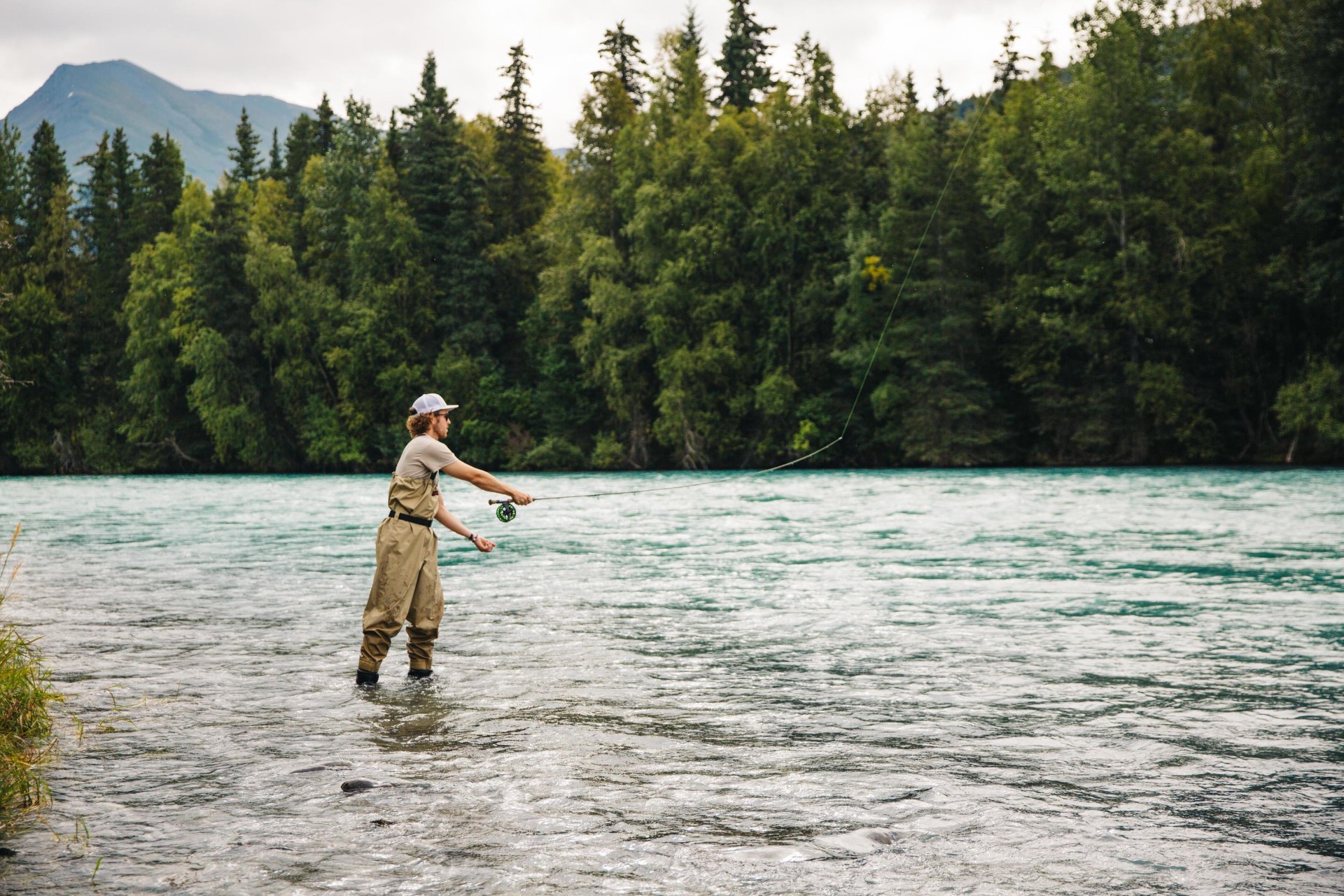
Alaska represents the ultimate pilgrimage for the serious angler, offering a vast wilderness ecosystem where the scale of the migrations matches the grandeur of the landscape. From the legendary runs of the Kenai Peninsula to the remote, untouched drainages of Bristol Bay, these destinations provide opportunities to target five species of Pacific salmon alongside trophy-sized resident trout. Planning a trip to the Last Frontier requires technical preparation and an understanding of seasonal timing to ensure you are on the water when the bite is at its absolute peak.
The Kenai River: Home of the Giants
The Kenai River is globally recognized as the premier destination for massive Chinook (King) salmon, holding the world record at 97 pounds, 4 ounces. Flowing through the heart of the Kenai Peninsula, this glacial-blue river is divided into the Upper, Middle, and Lower sections, each offering distinct opportunities. While the early and late King runs attract heavy boat traffic, the river is equally famous for its staggering sockeye salmon returns in July, which often number in the millions. Anglers typically utilize the 'flossing' technique with weighted coho flies or Gamakatsu hooks to target these hard-fighting fish along the gravel bars.
Beyond salmon, the Kenai is a world-class destination for trophy rainbow trout and Dolly Varden, particularly in the Upper River near Cooper Landing. As salmon begin to spawn in August and September, resident trout gorge on drifting eggs and flesh. Using an 8mm or 10mm plastic bead painted to match the specific stage of the salmon spawn is the most effective method for landing trout exceeding 30 inches. Fly anglers should use 6-weight rods with fluorocarbon tippets, as the glacial silt can be abrasive, necessitating high-quality reels with smooth drag systems like those from Ross or Abel.
Bristol Bay: The Ultimate Salmon Stronghold
Bristol Bay stands as the most productive salmon fishery on the planet, serving as an untouched mosaic of rivers like the Nushagak, Kvichak, and Naknek. This region is the gold standard for Alaska fly fishing, where anglers can target sockeye, kings, silvers, and chum in a single trip. The Nushagak River, in particular, hosts one of the largest runs of King salmon in the state, often seeing tens of thousands of fish entering the system in late June. Back-trolling Kwikfish or bouncing cured salmon roe in deep holes are the primary methods for targeting these fresh, chrome-bright fish.
The Naknek River and Kvichak River systems are famous for producing some of the largest wild rainbow trout in North America. These fish migrate from the massive Lake Becharof and Lake Iliamna to feed on salmon fry and eggs. During the 'smolt out' in June, streamers that mimic small out-migrating salmon are incredibly effective. Anglers should carry 8-weight rods to handle the wind and the sheer power of these 'leopard' rainbows, which frequently reach lengths of 30 inches or more. This remote region usually requires floatplane access, making it a true wilderness experience.
Homer and Seward: Saltwater Powerhouses
For those seeking a saltwater adventure, Homer is widely considered the Halibut Capital of the World. Situated at the tip of the Kenai Peninsula, Kachemak Bay provides access to the rich waters of Cook Inlet, where Pacific halibut congregate in deep trenches. These flatfish can range from 20-pound 'chickens' to massive 'barn doors' exceeding 300 pounds. Success often depends on heavy-duty conventional gear, such as Penn Squall reels spooled with 80-lb braid and 16/0 circle hooks. Heavy lead weights, sometimes up to 3 pounds, are necessary to stay on the bottom during the region's massive tidal swings.
Beyond halibut, the waters near Homer and neighboring Seward offer exceptional trolling for King and Silver salmon. Charter boats often utilize downriggers and flashers to target salmon at depths of 30 to 90 feet. In late summer, the 'silver' (coho) run takes center stage, and these acrobatic fish can be caught using herring-wrapped hoochies or spoons. Seward’s Resurrection Bay also offers unique opportunities for rockfish and lingcod, though regulations for lingcod are often strict, typically opening in July with specific size requirements to protect the population.
Southeast Alaska: The Inside Passage and Beyond
Southeast Alaska, particularly the waters around Ketchikan and Sitka, offers a distinct coastal rainforest fishing experience. This region is a labyrinth of islands and channels that serve as a primary migratory path for salmon heading toward spawning grounds across the Pacific Northwest. Sitka is particularly famous for its high catch rates of King salmon, as it is one of the first stops for fish coming in from the open ocean. Trolling with downriggers and flashers is the standard here, with Blue Fox Pixee spoons and Luhr-Jensen Coyote spoons being staple choices for local guides.
The freshwater systems in Southeast Alaska, such as those on Prince of Wales Island, provide incredible intimacy for the wading angler. These small streams are home to productive runs of steelhead in the spring and coho in the fall. Fly fishing for steelhead in April and May requires stealth and precisely drifted nymphs or small streamers like the Intruder. The dense vegetation and frequent rainfall mean that high-quality GORE-TEX waders and boots with felt or carbide studs are essential for navigating the slippery, moss-covered rocks.
Copper River Basin: Interior Gems
The Gulkana and Copper Rivers represent the rugged interior fishing experience, located several hours' drive from Anchorage. The Gulkana, a federally designated Wild and Scenic River, is one of the most popular interior destinations for King and Sockeye salmon. Because the river is relatively clear compared to the glacial Copper River, it is an excellent choice for fly anglers. Large weighted nymphs and egg-sucking leeches are highly effective when swung through the Gulkana's deeper runs where Kings hold before moving upstream to spawn.
The Copper River is famous for its high-fat-content sockeye and king salmon, which must build massive energy reserves to navigate the river's powerful currents. While much of the Copper is too silty for traditional lure fishing, the tributaries offer excellent clear-water opportunities. This region is also home to Arctic Grayling, which provide consistent dry-fly action throughout the summer. Using a 3-weight or 4-weight rod with classic patterns like the Adams or Elk Hair Caddis can result in non-stop action for these iridescent, sail-finned beauties in the smaller feeder streams.
Frequently asked questions
When is the best time of year to fish in Alaska?
The peak season for Alaska fishing runs from June through September. King salmon typically arrive in June, while sockeye and pink salmon peak in July. August and September are the prime months for silver salmon and resident trophy rainbow trout. Most coastal charters operate through this window until late season storms arrive in October.
What gear weight should I pack for an Alaska trip?
For king salmon, use a heavy-action rod with 50-80 lb braided line. For sockeye and silvers, an 8-weight or 9-weight fly rod or a medium-heavy spinning setup with 15-20 lb monofilament is ideal. Trophy trout are often targeted with 6-weight fly rods using strike indicators and bead patterns that mimic salmon eggs.
Do I need a special license for salmon and halibut?
Yes, all non-residents aged 16 and older must purchase a valid State of Alaska fishing license. If you are targeting King Salmon, a specific King Salmon stamp is required in addition to the base license. These can be purchased online through the Alaska Department of Fish and Game website or at local tackle shops.
What are the most effective lures for Alaska salmon?
For most Kenai River and Bristol Bay applications, 1/2 to 1-ounce Vibrax spinners in silver, chartreuse, or fluorescent orange are standard. When fly fishing, carry a variety of flesh flies, egg patterns (8mm to 10mm beads), and large Dolly Varden streamers like the Sculpzilla to cover different seasonal forage.
Related articles
Family-Friendly Fishing Locations Across the USA
Skip the wilderness epic. These family-friendly spots deliver bent rods and happy kids every visit.
Alain Quiroga · Dec 7, 2025 · 5 min read
America's Most Underrated Fishing Towns
Forget Destin and Key West. These small towns offer world-class fishing without the bill or the boat traffic.
Alain Quiroga · Nov 23, 2025 · 5 min read
How to Plan the Perfect Fishing Road Trip
A great fishing road trip is engineered, not improvised. Use this framework to plan yours.
Alain Quiroga · Oct 5, 2025 · 5 min read