
Fishing from Kayaks: Essential Tips and Safety Advice
A kayak unlocks water no boat can reach. These habits keep your gear in the boat and you out of trouble.
By Alain Quiroga · January 19, 2026 · 5 min read
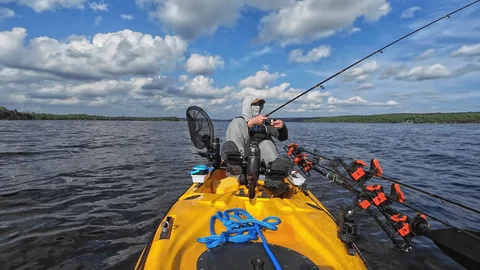
Kayak fishing has evolved from a niche hobby into a dominant force in the U.S. angling scene, offering access to secluded waters that traditional bass boats simply cannot reach. Whether you are navigating the shallow marshes of the Louisiana Bayou for redfish or stalking trophy smallmouth bass in the Susquehanna River, mastering the nuances of a small craft is essential. This guide provides expert-level insights into gear optimization, seasonal strategies, and vital safety protocols to elevate your kayak angling experience.
Choosing and Outfitting Your Angling Vessel
Selecting the right hull is the first step in successful kayak fishing. For most U.S. inland waters like Lake Guntersville or the Quabbin Reservoir, a sit-on-top kayak between 11 and 13 feet offers the best balance of stability and maneuverability. Stability is paramount if you plan to stand and sight-cast for spawing largemouth bass in the spring; look for models with a wide beam, such as the Hobie Mirage Pro Angler or the Old Town Sportsman series. These vessels often feature tunnel hulls that allow for a rock-solid platform even in light chop.
Propulsion is the next major consideration. While traditional paddling is excellent for exercise and silent approaches in extremely shallow water, pedal-drive systems have revolutionized the sport. Using your leg muscles to power fin or propeller drives leaves your hands free to manage a 7-foot Lew’s or St. Croix rod. This is a game-changer when fighting a heavy fish in a current or maintaining your position against a 10-mph wind. Pedal drives also allow for efficient trolling, a lethal technique for targeting suspended walleye or trout in deep glacial lakes.
Expert Gear Management and Electronics Integration产
On a kayak, deck space is at a premium, requiring a minimalist yet highly functional approach to tackle storage. A specialized crate system, such as the YakAttack BlackPak, allows you to store four to six vertical rod holders and several 3600-size Plano tackle boxes within arm's reach. Focus on multi-purpose lures to save space; for example, a selection of 3/8-oz Z-Man ChatterBaits and various Keitech swimbait trailers can cover almost any water column depth. Using a 15-lb test Seaguar fluorocarbon leader will ensure stealth in clear water while providing abrasion resistance.
Electronics are no longer reserved for large boats. Portable fish finders like the Garmin STRIKER Cast or Humminbird Helix 5 can be mounted using RAM tracks. These units are invaluable for identifying brush piles in 15 feet of water or finding the thermocline during the heat of a Georgia summer on Lake Lanier. Powering these units requires a lightweight 10Ah or 20Ah Lithium Iron Phosphate (LiFePO4) battery, which provides consistent voltage throughout the day without the back-breaking weight of a traditional lead-acid marine battery.
Advanced Maneuvering and Boat Control Techniques
The greatest advantage of a kayak is the stealth it affords, but this is easily negated by poor boat control. When fishing moving water like the New River for smallmouth, you must master the 'ferry angle.' By angling your bow across the current and back-paddling or pedaling, you can slide sideways across the river, keeping your lure in the strike zone longer. Use a 1.5-lb folding grapnel anchor or a Power-Pole Micro Spike to pin yourself in position once you find a productive hole. This prevents the current from pushing you past the fish before you can make a second cast.
Weight distribution, or 'trimming' the boat, significantly impacts performance. If your kayak is bow-heavy, it will plow through water and become difficult to turn; if it is stern-heavy, the bow will catch the wind and spin you off course. Place your heavy battery and crate toward the center or slightly behind the seat. In windy conditions on open water like Lake Michigan, a drift sock can be a lifesaver. It slows your drift to a crawl, allowing you to effectively jig for lake trout or salmon without constantly fighting to stay vertical.
Vital Safety Protocols for Open Water and Moving Currents
Safety on a kayak starts with visibility. Because your profile is low to the water, you are often invisible to larger powerboats, especially in low-light conditions or heavy chop. A tall safety flag and an integrated LED light, such as the YakAttack VisiCarbon Pro, are mandatory for dawn and dusk sessions. Always file a float plan with a friend, detailing your launch point—be it a specific ramp on the Potomac or a remote beach on the Florida coast—and your expected return time. In the event of a capsize, having a whistle or a handheld VHF radio clipped to your PFD is critical.
The 're-entry' is a skill every kayak angler must practice in a controlled environment before heading into deep water. Standard 'deep-water re-entry' involves reaching across the kayak to the opposite gunwale, kicking your legs to get horizontal on the surface, and pulling your torso across the seat. Always carry a bilge pump or a large sponge to clear out any water that enters the hull during a flip. Remember that the 'golden rule' of kayak fishing is to never tie yourself to the vessel; if it rolls in a current, you do not want to be dragged underwater.
Seasonal Strategies and Localized Adaptations
Different seasons demand specific tactical shifts for the kayak angler. During the post-spawn period in June, fish often move to offshore ledges. In a kayak, this requires precise positioning using GPS waypoints. On lakes like Sam Rayburn, targeting these fish with a deep-diving crankbait requires a long cast to get the lure to its maximum depth. Because you have less leverage than a standing boater, you must sweep the rod horizontally to set the hook effectively. This 'side-sweep' ensures that the kayak's tendency to move toward the fish doesn't dampen the hookset power.
Winter kayak fishing offers some of the best opportunities for jumbo yellow perch or slab crappie, but it requires extreme caution. In northern states like Wisconsin or Pennsylvania, vertical jigging with a 1/8-oz tungsten jig and a Bobby Garland Mo' Glo swimlet is a proven producer. Stay close to the shoreline and avoid crossing large expanses of open water where wind can kick up dangerous waves. The peace and quiet of a mid-winter lake are unparalleled, but the margin for error is slim, making a dry suit an essential piece of cold-weather gear.
Frequently asked questions
What is the best type of life jacket for kayak fishing?
A Type III PFD (Personal Flotation Device) is the industry standard for kayak anglers. Modern designs like the NRS Chinook or Astral V-Eight offer high-back foam that clears most kayak seats. These vests feature multiple pockets for quick-access gear and are designed to allow a full range of motion for repetitive casting and paddling in warm conditions.
Do I need special rods and reels for kayak fishing?
While standard gear works, kayak-specific rods often have shorter butts to avoid hitting your PFD and leash attachment points. Many kayak anglers prefer 7-foot medium-heavy baitcasting rods for control. For reels, look for high-speed gear ratios to retrieve line quickly if a fish swims toward the boat, as you cannot easily move the vessel to compensate.
Do I need to register my kayak if I add a small motor?
Yes, in most states, any motorized vessel requires registration. If you add a Torqeedo or Minn Kota trolling motor to your kayak, you must obtain a hull registration number and display valid decals. Laws vary slightly by state—for example, Florida and Texas have strict registration requirements for motorized kayaks—so always check with your local fish and wildlife commission.
What is the safest water temperature for kayak fishing?
The 120-degree rule is a common safety benchmark: only head out if the combined air and water temperatures equal at least 120 degrees Fahrenheit. If the water temperature is below 60 degrees, a dry suit or thick neoprene wetsuit is mandatory to prevent cold-water shock and hypothermia, regardless of how warm the air temperature might feel.
Related articles
Night Fishing Techniques That Actually Work
Big fish drop their guard after dark. Here's how to capitalize without losing tackle or your sanity.
Alain Quiroga · Feb 15, 2026 · 5 min read
How Weather Conditions Affect Fishing Success
Fronts, pressure swings, and wind direction predict the bite more reliably than any moon chart.
Alain Quiroga · Feb 8, 2026 · 6 min read
How to Read Water Like a Professional Angler
Reading water is the most underrated skill in fishing. Once you learn it, you'll catch fish anywhere.
Alain Quiroga · Dec 28, 2025 · 5 min read