
Fishing Success: The Science Behind Finding Fish
Fish location is predictable when you understand biology, water chemistry, and food chains. Here's the science.
By Alain Quiroga · September 21, 2025 · 5 min read
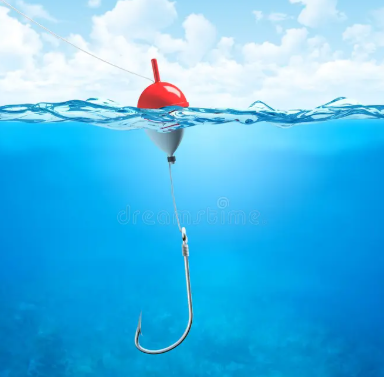
Mastering the science of finding fish requires moving beyond guesswork and entering the realm of biology and limnology. Understanding how species like Largemouth Bass and Walleye interact with their environment allows an angler to predict movements across different seasons and weather patterns. By combining advanced electronics with a firm grasp of water chemistry and fish physiology, you can consistently locate the most productive zones in any body of water, from Lake Michigan to the Santee Cooper lakes.
The Biological Imperative: Temperature and Forage
The foundation of the science of finding fish lies in understanding how biological needs dictate movement. All freshwater species are ectothermic, meaning their metabolism and activity levels are governed by the temperature of the surrounding water. For example, during the spring spawn on Lake Guntersville, Largemouth Bass seek out shallow, hard-bottomed flats that warm quickly to the optimal 62-68 degree range. In contrast, cold-water species like Lake Trout in Lake Superior require temperatures below 55 degrees, often retreating to depths of over 100 feet as surface waters warm in July.
Beyond temperature, the search for forage is the primary driver of location. Gizzard Shad and Threadfin Shad are the "engines" of many southern reservoirs. When these baitfish move toward the backs of creeks in the autumn to find warmer water and plankton, predators like Striped Bass follow them in massive schools. Successful anglers use their electronics to find "bait clouds" rather than individual game fish targets. Using a Side Imaging unit from Humminbird can reveal these schools of shad along creek channels, indicating that larger predators are likely patrolling the immediate vicinity.
The Oxygen Factor and Limnology
Dissolved oxygen (DO) is a frequently overlooked scientific factor in fish location. In the heat of summer, large lakes often stratify into layers. The epilimnion is the warm, oxygen-rich top layer, while the hypolimnion is the cold, oxygen-poor bottom layer. The "thermocline" is the narrow band between them. Many species, particularly Walleye and Yellow Perch in Lake Erie, will suspend just above the thermocline to access both cooler temperatures and sufficient oxygen. If you fish below the thermocline during August, you are likely casting into a biological desert where fish cannot survive for long.
Aquatic vegetation plays a dual role by providing both cover and oxygen. In the dense lily pad fields of the Florida Everglades or the Milfoil beds of Lake Minnetonka, photosynthesis creates oxygen-rich micro-environments. During high-sun periods, Largemouth Bass use the shade of this vegetation for both thermoregulation and as an ambush point. Precision casting with a Texas-rigged Zoom Brush Hog into the heart of this cover is a proven method because the fish are biologically incentivized to stay within these high-oxygen, shaded zones during the peak heat of the day.
Sensory Perception: Vibration and Vision
The lateral line system is a sophisticated sensory organ that allows fish to "see" with their bodies. This organ detects low-frequency vibrations and pressure changes, which is how a Flathead Catfish in the murky Missouri River can pinpoint a struggling bluegill in total darkness. Understanding this allows anglers to choose lures based on water clarity. In muddy water, the science of finding fish dictates using high-vibration baits like the Jackall TN60 Lipless Crankbait. These lures send out waves that fish can track through their lateral lines long before they see the bait.
Vision is also tuned to specific depths and light conditions. Walleyes have a specialized reflective layer behind their retina called the tapetum lucidum, which amplifies light. This is why they are most active during "Walleye Chop" conditions or low-light periods on lakes like Mille Lacs. On the other hand, sight-feeders like Smallmouth Bass in the clear waters of Lake St. Clair rely heavily on visual cues. In these conditions, using fluorocarbon leaders like Seaguar InvisX is essential because it has a refractive index close to water, making it nearly invisible to wary, visual predators.
Atmospheric Influence: Barometric Pressure Impacts
Barometric pressure changes have a profound effect on the swim bladder, an internal organ fish use to maintain buoyancy. When a low-pressure system approaches, the decrease in atmospheric pressure allows the swim bladder to expand, which can cause discomfort. To compensate, fish often move lower in the water column or transition into heavy cover. Experienced anglers on the Tennessee River system often look for a "feeding window" just before a cold front hits, as fish sense the impending pressure change and gorge themselves while they are still comfortable.
Once the front passes and a high-pressure system settles in (often accompanied by clear blue "bird skies"), the fishing usually becomes difficult. In these post-frontal conditions, fish like Spotted Bass will often move to the bottom or tuck deep into brush piles. Success during these periods requires "finesse" techniques. Scaling down to a 1/8 oz shakey head or a Ned Rig with 6-lb test line allows you to present a bait slowly enough to entice a fish that is physically affected by the high barometric pressure and less inclined to chase.
The Physics of Structure and Current Flow
Modern fisheries science is heavily reliant on GPS and sonar technology to map the underwater world. Advanced tools like Side Scan and 360-degree Imaging have revolutionized how we find offshore structure. In reservoirs like Lake Texoma, finding "the spot on the spot"—such as a single large rock on a long point or a lone stump on a channel swing—is the key to tournament-level success. These structural anomalies serve as landmarks for migrating fish and as ambush points for resident predators. Scientific mapping allows us to see the exact contour lines where depth changes occur rapidly.
Current is another scientific constant, especially in river systems like the Ohio or the Columbia. Fish are masters of energy conservation; they will almost always sit in "current seams" where fast water meets slow water. By sitting in the slack water behind a wing dam or a large boulder, a Smallmouth Bass can wait for the river to wash food directly to it. Finding these hydro-dynamic eddies is a matter of observing surface ripples and understanding how water flows around physical obstructions. Casting a Rapala Shad Rap into the seam and letting it drift into the slack water mimics the natural movement of disoriented baitfish.
Frequently asked questions
What is a thermocline and how does it affect fish location?
Thermoclines are distinct layers where water temperature changes rapidly with depth. In summer, most fish stay above the thermocline where oxygen is plentiful. Anglers can often spot this layer on electronics like a Garmin EchoMAP as a faint horizontal line. Concentrating your efforts just above this transition zone is vital for locating active Walleye and Smallmouth Bass.
How do fish use their lateral lines to find food?
Lateral lines are sensory organs that detect vibrations and pressure changes in the water. This biological feature allows fish like Muskellunge to hunt in murky water or low-light conditions. When fishing stained water, using lures that displace a lot of water or vibrate heavily, such as a Mepps Aglia long-blade spinner, helps fish locate your bait through their lateral line system.
How does barometric pressure influence fishing success?
In the U.S., Barometric pressure significantly impacts fish behavior. A dropping barometer often triggers a feeding frenzy as fish sense an approaching front. Conversely, post-frontal high pressure usually causes fish to hold tight to deep cover. Anglers should target aggressive fish during the "lead-in" to a storm and switch to slower, finesse presentations like a Ned Rig when the pressure peaks.
Why is dissolved oxygen important for locating fish?
Dissolved oxygen (DO) levels are critical; most game fish prefer DO levels above 5 parts per million. In late summer, stagnant backwaters often become hypoxic, forcing fish toward moving water or wind-blown points. Seek out areas with aquatic vegetation, such as Hydrilla, which produces oxygen through photosynthesis, or look for aerated water near dams and spillways to find the most active fish.
Related articles
Night Fishing Techniques That Actually Work
Big fish drop their guard after dark. Here's how to capitalize without losing tackle or your sanity.
Alain Quiroga · Feb 15, 2026 · 5 min read
How Weather Conditions Affect Fishing Success
Fronts, pressure swings, and wind direction predict the bite more reliably than any moon chart.
Alain Quiroga · Feb 8, 2026 · 6 min read
Fishing from Kayaks: Essential Tips and Safety Advice
A kayak unlocks water no boat can reach. These habits keep your gear in the boat and you out of trouble.
Alain Quiroga · Jan 19, 2026 · 5 min read